Note: No affiliate links, no sponsor. Every image below came out of one chat session on a free ChatGPT account, from the prompts printed next to them. The starting photo is a stock photo rather than my own living room, so you can download the same one and repeat all seven runs.
The question I set out to answer was small: can a free ChatGPT account redesign a photo of your room, or do you have to pay first?
The expectation baked into most of the advice is that you pay first. So I opened a free account and started typing.
It edited the photo. Then it did it six more times, in the same conversation, and never once told me to upgrade.
That turned out to be the boring half of the answer. There is a wall, but nothing counts down to it. What you hit is one particular kind of request, and you will get there on about your third idea.
The setup
One photo, one free account, one conversation. No plugins and no paid extras.
 The account I ran everything on. OpenAI's own wording for what I had: "Limited image creation." Prices show in local currency because I am in South Korea.
Hold onto that phrase. Limited image creation is what the plan promises, and finding where the limit sat was the point of the exercise.
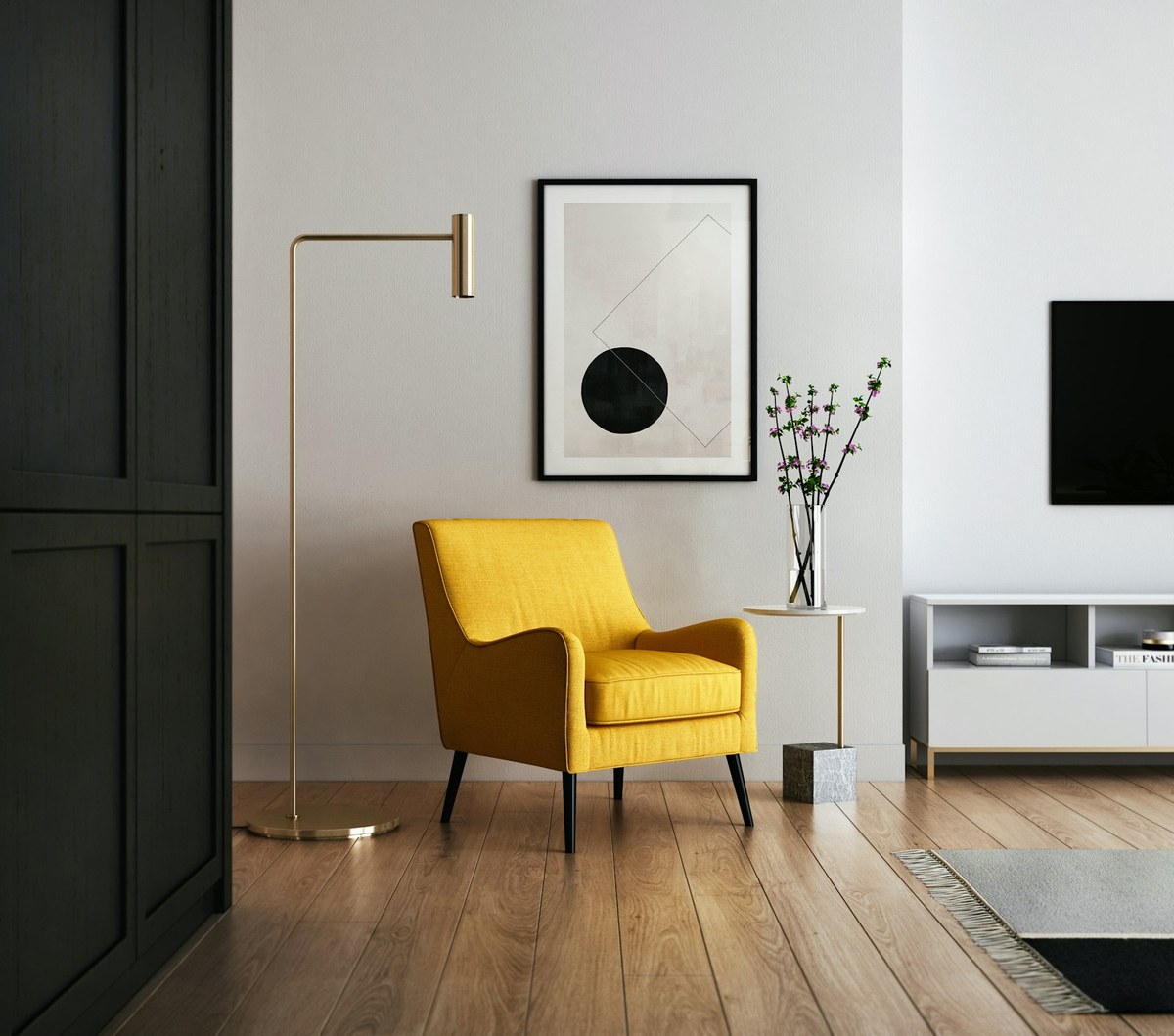 The starting photo. Yellow armchair, brass lamp, framed print, dark wardrobe on the left, TV and white sideboard on the right.
The photo is 1600 x 1412 pixels. Keep that number in mind, because it comes back later.
I ran everything in one chat rather than starting fresh each time. That matters more than it sounds like it does, and it is the first thing worth knowing.
Run 1: the whole room at once
Redesign this room in Scandinavian style.
Six words. No lock paragraph, no furniture inventory, no "keep everything else the same".
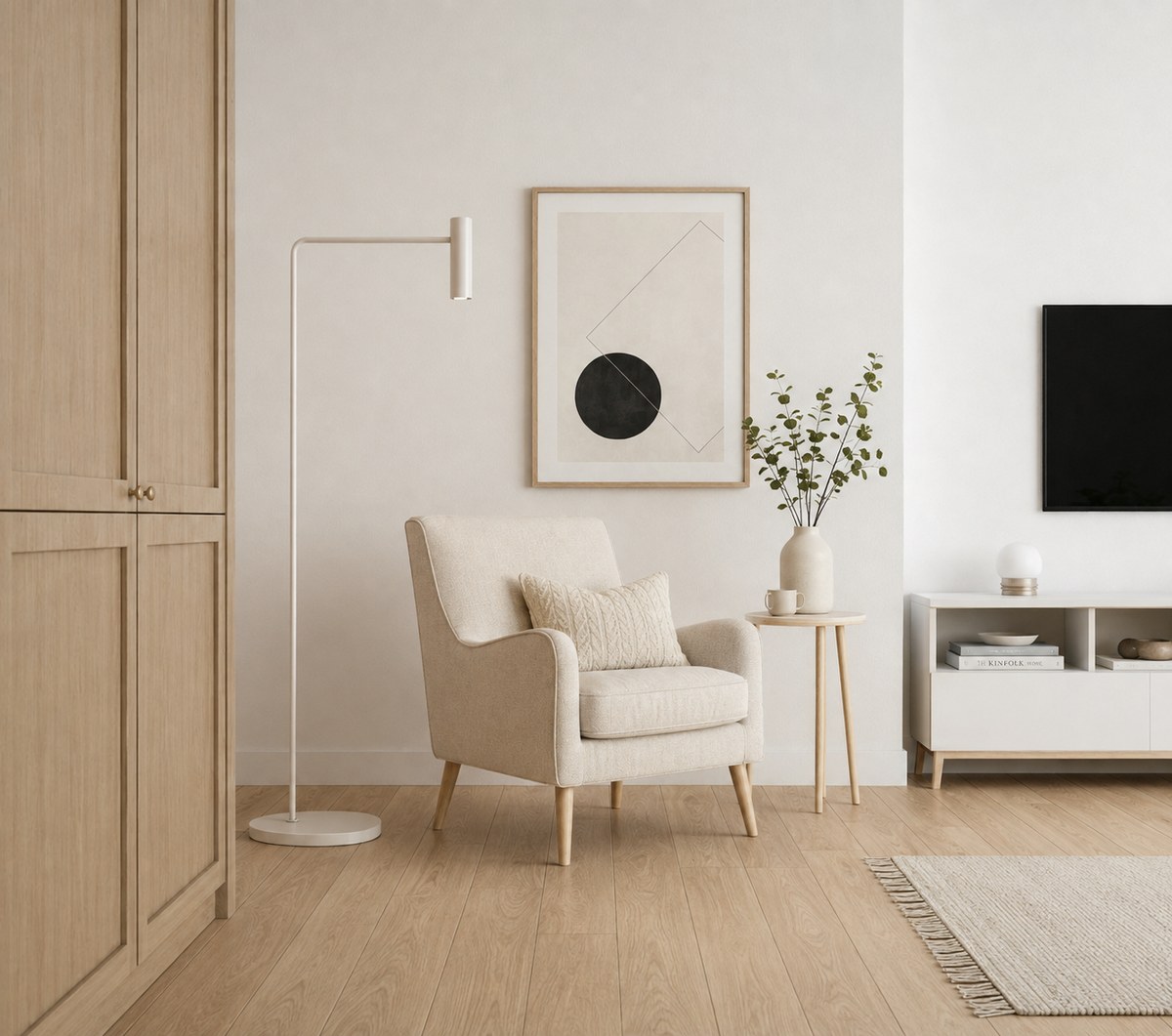 Run 1. Everything moved to pale wood and cream. Nothing moved position.
Every object is still where it was. The wardrobe, the floor lamp, the framed print, the armchair, the side table, the vase, the TV, the sideboard, the rug. Same positions, same sizes, same camera.
What changed is material and colour. Dark wardrobe to light oak. Brass lamp to white. Yellow chair to cream boucle. Pink blossom to eucalyptus.
The framed print is the detail to watch. It is the same artwork, the same black circle in the same spot inside the same thin diamond. Only the frame changed from black to oak. Remember this too.
Run 2: two changes at once
Keep everything in the same place, but make the sofa dark grey
and add a large plant in the left corner.
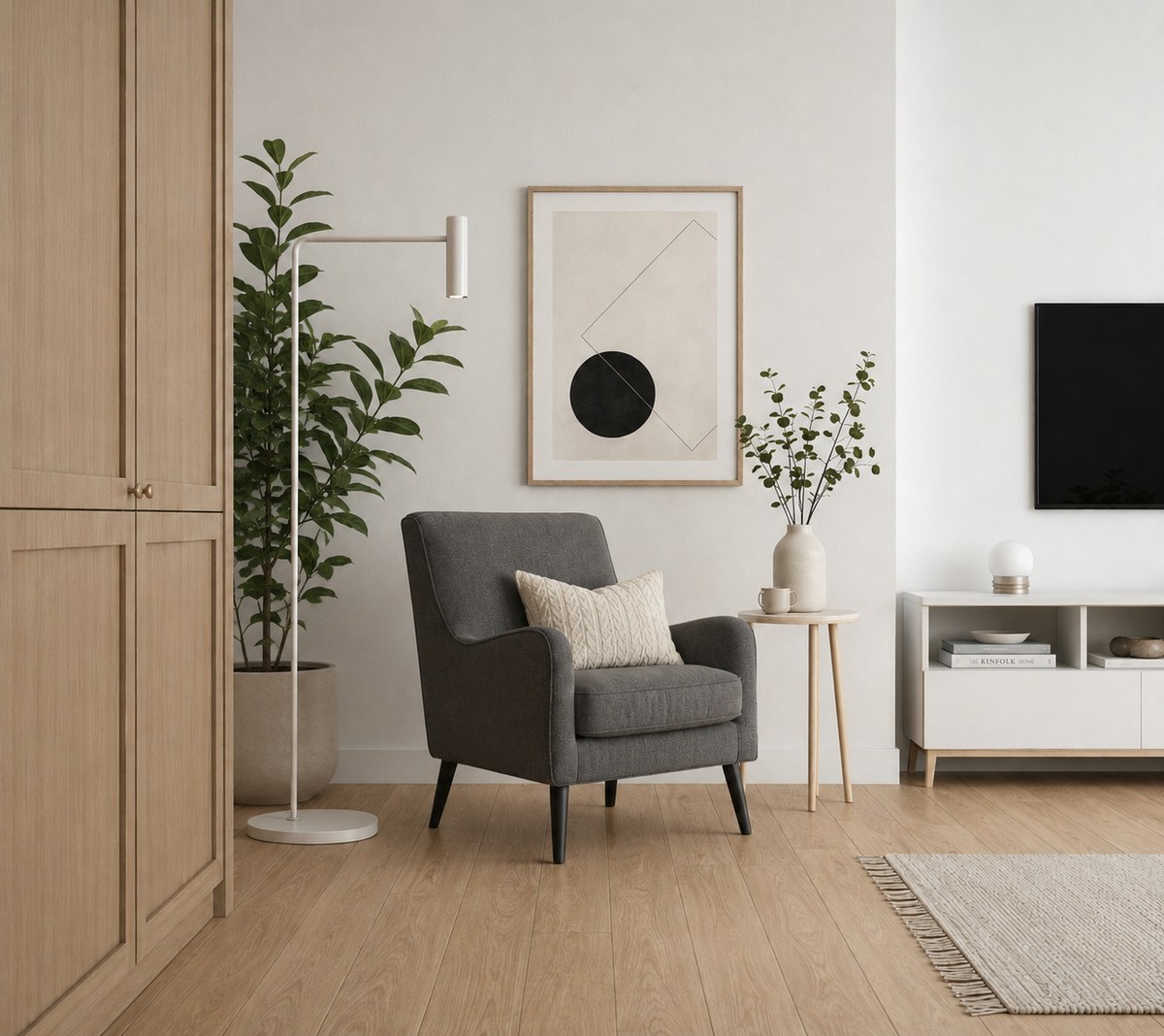 Run 2. Both requests landed. The chair legs went back to black without being asked.
Both asks landed. Grey chair, plant in the left corner, everything else held.
One thing changed that I did not ask for. In run 1 the chair had pale wooden legs. In run 2 they are black again, the way they were in the original photo. Nobody asked for that. It is small, and if you were designing a real room you would probably not notice until you were standing in a shop looking at legs.
Expect that shape of failure. What breaks is rarely the thing you asked for; more often it is something you already agreed to, quietly reverting.
Run 3: a material change
Now show the same room with a lighter, wider oak floor.
Keep the furniture exactly as it is.
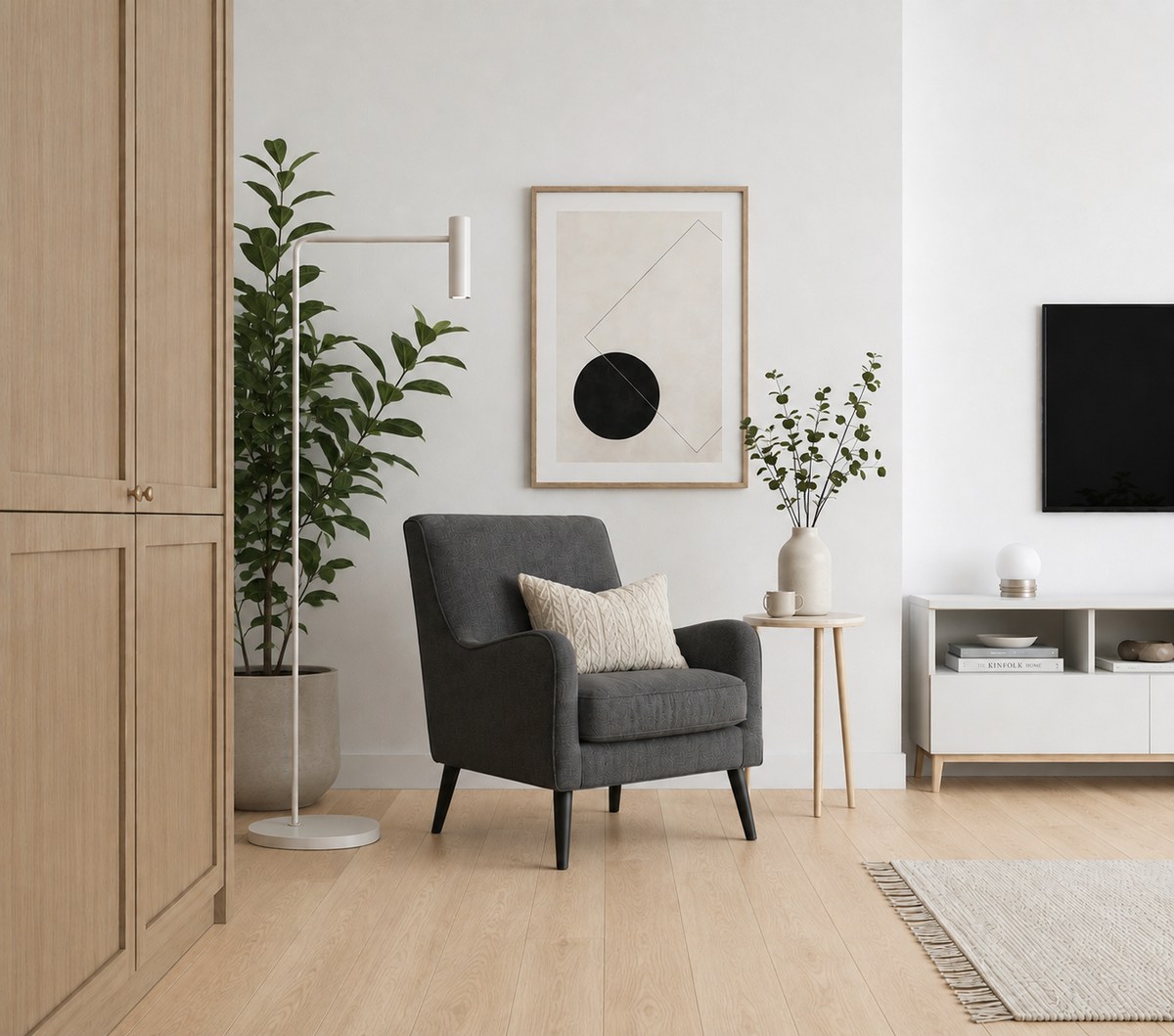 Run 3. The floor changed. The two edits from earlier runs survived.
The floor changed and nothing else did. More usefully, the grey chair and the corner plant from run 2 are still there.
That part surprised me on a free account. The edits stack. You are not re-editing the original photo every time and hoping the model remembers. You are editing the last result. Three ideas deep, all three were still on screen.
Run 4: time of day
Same room at night, with the floor lamp on and warm light.
Do not move any furniture.
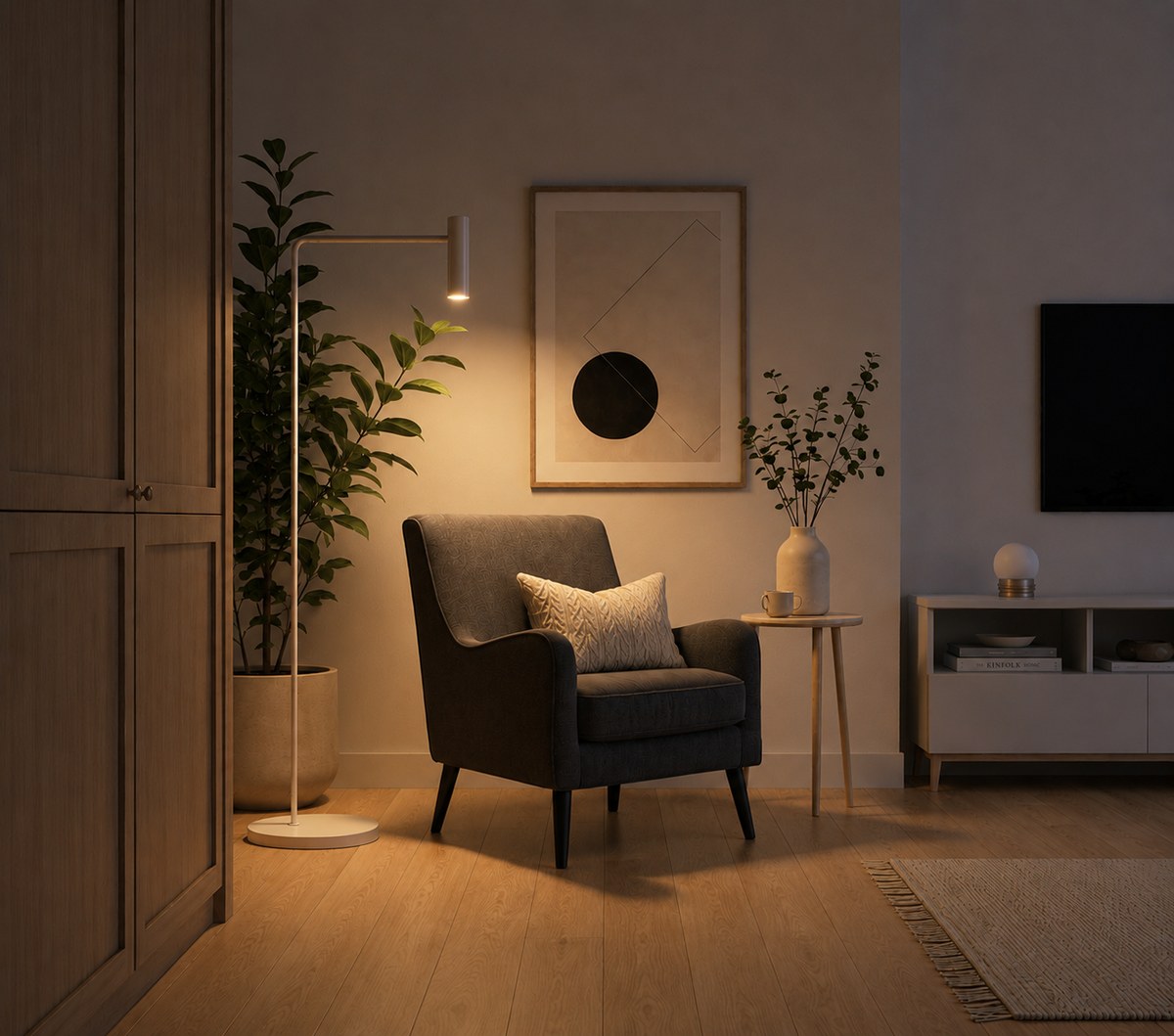 Run 4. The lamp casts a real pool of light and the chair throws a shadow away from it.
Of the seven, this one is the best. The lamp actually lights the wall behind it, the pool of light falls off with distance, and the chair's shadow points away from the lamp rather than in some arbitrary direction. The pillow, the mug on the side table and the books on the sideboard are all still there in the dark.
Four runs in. No cap, no upgrade prompt, no slowdown. Each image took forty to forty-five seconds from pressing send to appearing.
Run 5: change what the room is for
Back to daylight. Turn this into a home office: replace the armchair
with a wooden desk and a chair. Keep the wardrobe, the plant,
the artwork and the TV unit exactly where they are.
This is a bigger ask than a colour. It removes a piece of furniture and puts a different category of thing in its place.
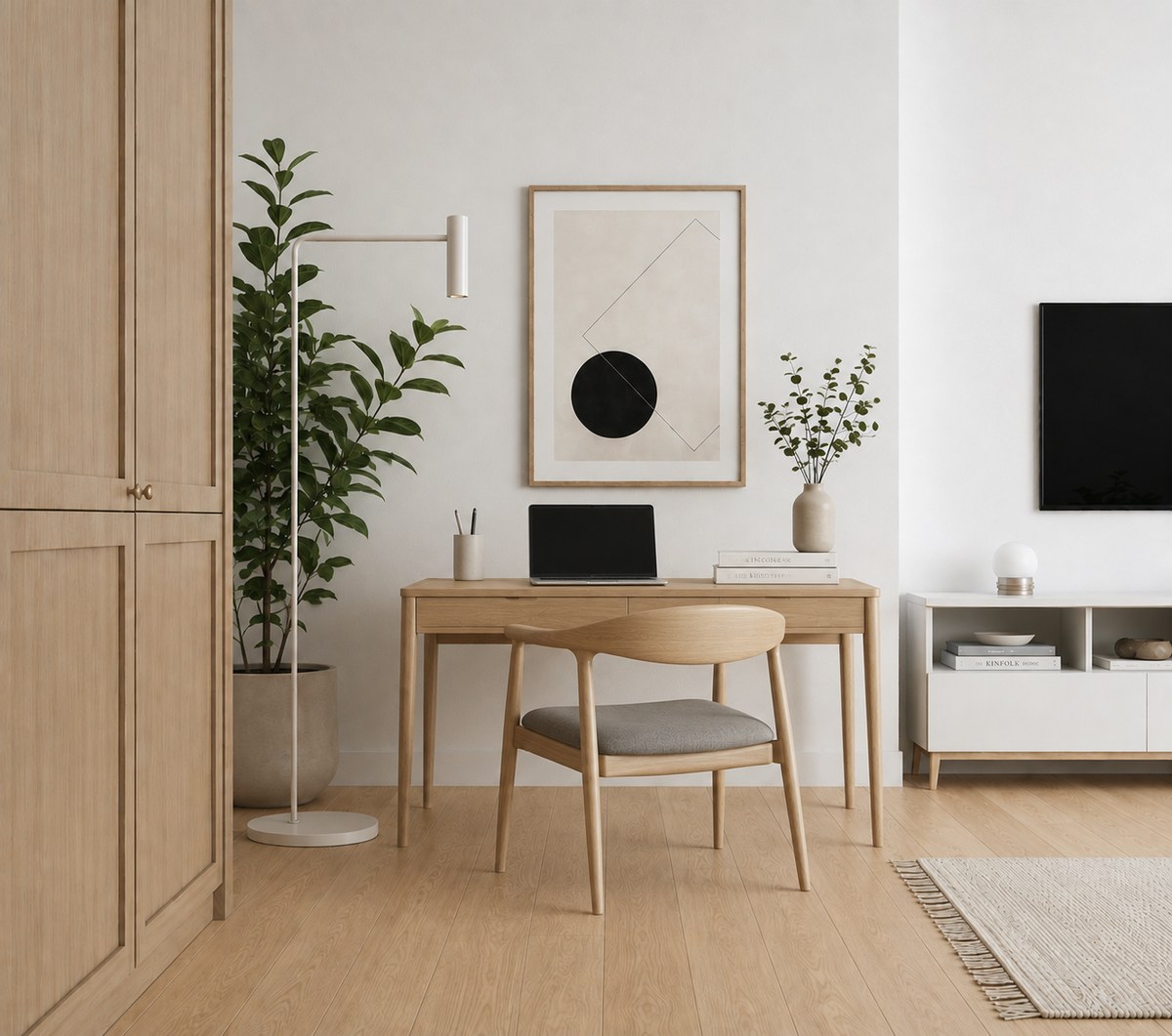 Run 5. Armchair out, desk and chair in. Everything named in the prompt stayed.
It did exactly that. Desk, chair, laptop. The four things I named as fixed are fixed.
The side table went with the armchair, which I had not asked for either way, and the vase relocated onto the desk. That is a reasonable reading of the request rather than a mistake.
Five ideas deep on a free account, still no limit.
Run 6: the one that broke
Show the same room from the opposite corner, looking back toward
the wardrobe.
People actually want this one. You have a room you like on screen and you want to see the rest of it.
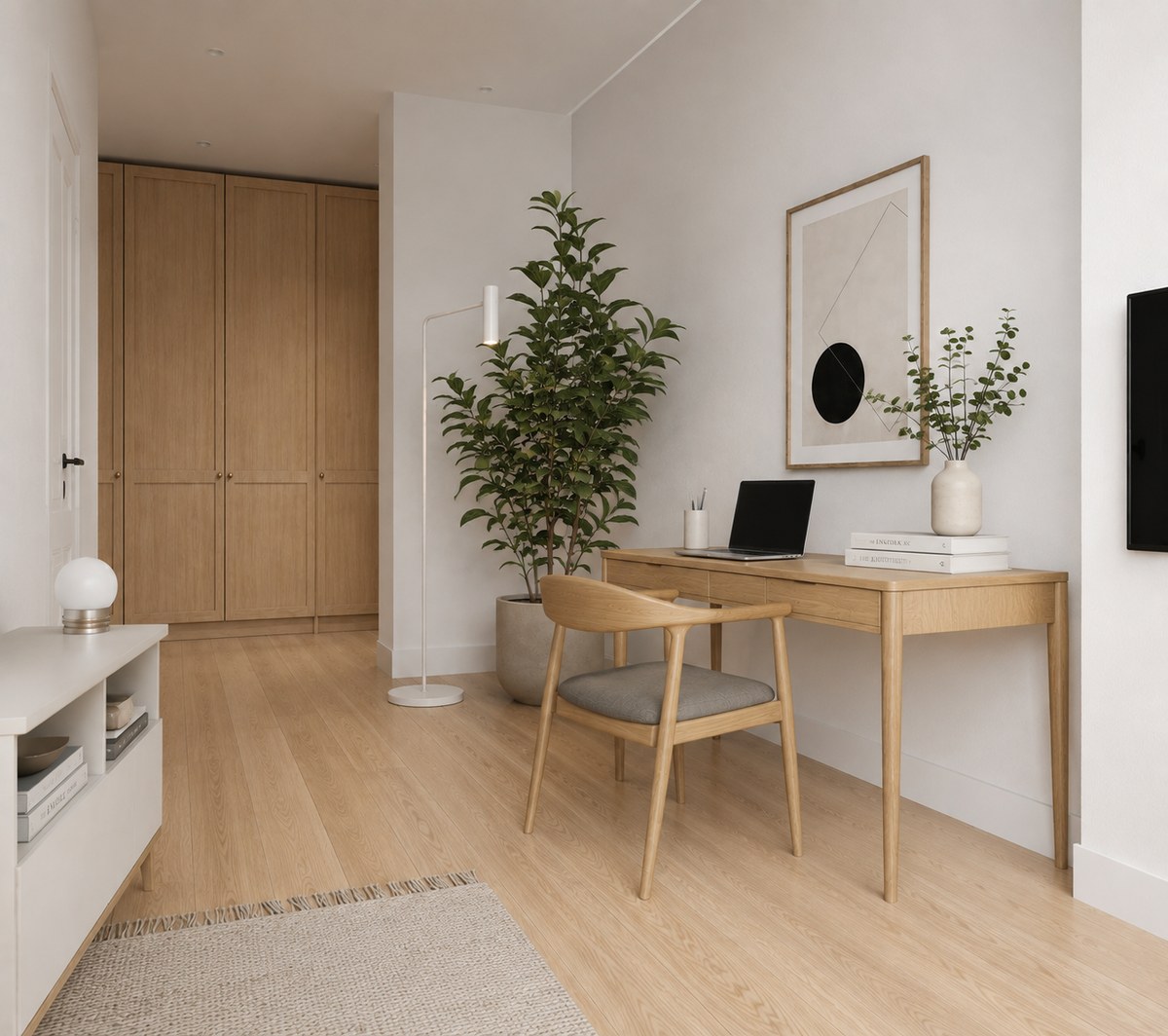 Run 6. It looks fine. It is not the same room.
Look at it on its own and it is a good image. Put it next to run 5 and it is a different room.
The framed print is the proof. For five runs the artwork inside that frame held: a black circle sitting low-left inside a thin diamond outline, pixel for pixel, through a style change, a colour change, a floor change and a night scene. In run 6 the geometry inside the frame is different. The line work changed shape and the circle sits somewhere else.
Everything else can be argued away as perspective. That cannot.
Two more things appeared out of nothing: a white door and a corridor at the far left that exist in none of the previous six images, and recessed downlights in a ceiling that had none. The wardrobe changed from the panelled unit in runs 1 to 5 to a three-door version with different proportions.
So the model did not move a camera around a room it understood. It generated a plausible different room using the same furniture vocabulary. Which is a different job from the one I asked for, and it is worth knowing that the output of that job looks exactly as convincing as the real thing.
Run 7: it does not come back
Make the walls a soft sage green. Change nothing else.
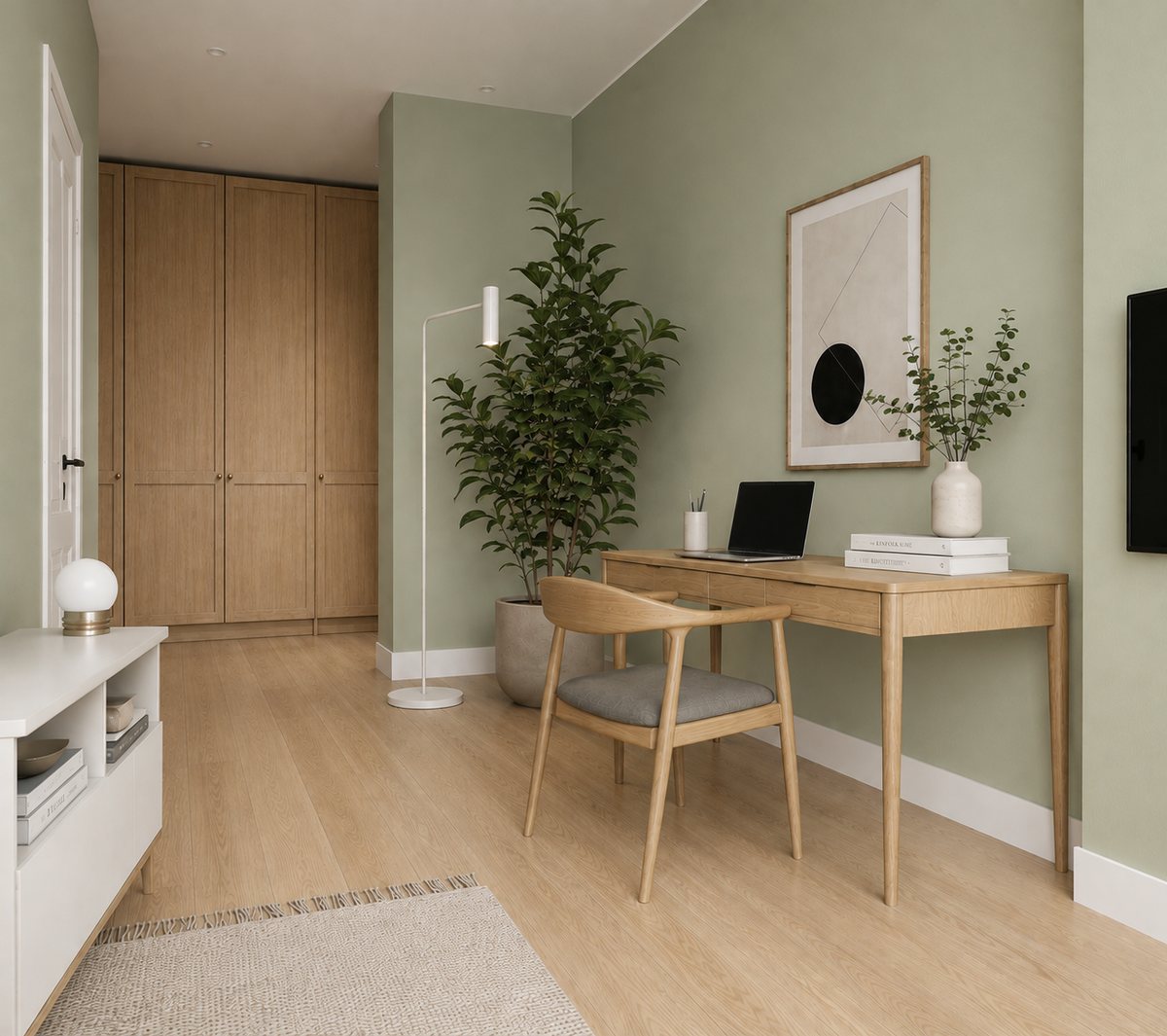 Run 7. A clean single-attribute edit, applied to the wrong room.
Technically this is the most obedient run of the seven. The walls went sage green and nothing else moved at all, down to the weave of the rug and the books stacked on the sideboard.
It just applied that edit to the room from run 6, invented door and all. The original room did not come back.
Run 6 costs you more than one bad image. The conversation carries the wrong room forward. Every edit after that point is an edit of the wrong room.
What the free plan actually costs you
Seven images, one session, one free account, no cap reached and no upgrade prompt at any point. Forty to forty-five seconds per image across the four runs I timed. Whatever "limited image creation" means on this plan, seven edits of the same photo did not reach it.
The one measurable cost is size. The input was 1600 pixels wide. Every output came back between 1329 and 1335 pixels wide, about 17% smaller, with the aspect ratio preserved to within a percent. That is enough for looking at a paint colour and not enough for printing.
I should be clear about what that finding is worth. This is one account on one day. Free limits are not published, they change, and they are often applied per account rather than per plan. What I can say is what happened: seven consecutive image edits, no wall.
The rule I would give you
The dividing line is not free versus paid. It is editing versus generating.
Anything that keeps the camera where it is behaves like an edit. Colour, material, lighting, time of day, swapping one object for another, changing what the room is for. All of those held the room together across seven runs on a free account.
Anything that asks the model to move the camera is a new generation wearing your room's clothes. It will look right. The furniture will be the right furniture. And the architecture will be quietly wrong in ways you will not catch unless you have something specific to check against.
Which is why it is worth putting something in the frame you can check. A picture on the wall works. So does a book spine, a rug pattern, anything with structure that has no business changing. Then you have an answer rather than an impression.
What I did not test
I did not test whether you can get the original room back after a bad run, by scrolling up and editing an earlier message instead of continuing. That is the obvious next thing to try and I have not tried it.
I did not test a second free account, a different day, or a room with people in it. I did not test the paid tier alongside this, so I cannot tell you what an upgrade buys you here.
If you are going to try this
Use one photo, straight on, with the things you care about in frame. Work in a single conversation so your edits stack. Name the things that must not move. And when you catch yourself about to ask for a different angle, save the image you have first, because the room you are looking at may not survive the question.
Related: eight prompts for changing one thing at a time, run on a paid account with a lock paragraph, and what happened when I fed a grey massing model to ChatGPT five times.