Note: No affiliate links and no sponsor. Every screenshot below came off my own screen this morning. Where a number is a company's claim rather than something I measured, I say so in that sentence rather than in a footnote.
Three launches landed inside four days:
- August 6. OpenAI: GPT-5.6 Luna becomes the default model for Free and Go users, unlimited chat to follow.
- August 7. xAI: Grok Imagine Image 2.0, with region editing, multiple reference images, and transparent-background extraction.
- August 3. Alibaba: Qwen3.8-Max, its largest flagship model.
Every writeup I read treated "free" as a single thing. So I opened all three the way someone who read the news would, and paid nothing. What "free" turned out to mean was different in each case, and the differences are more useful than the announcements.
OpenAI: a better model you cannot identify
I signed into a free ChatGPT account. The plan badge in the sidebar says Free, and the header carries an Upgrade link, so there is no ambiguity about what tier I was on.
The first thing I went looking for was the model selector. On a paid account there is one beside the composer; mine said 즉시, meaning Instant. On the free account I could not find it, so I stopped eyeballing the page and enumerated every visible button instead. The list of mode selectors came back empty.
The one dropdown that exists is ChatGPT ⌄ in the top-left. Opening it produces two things: a "New chat" item, and an ad for Plus.
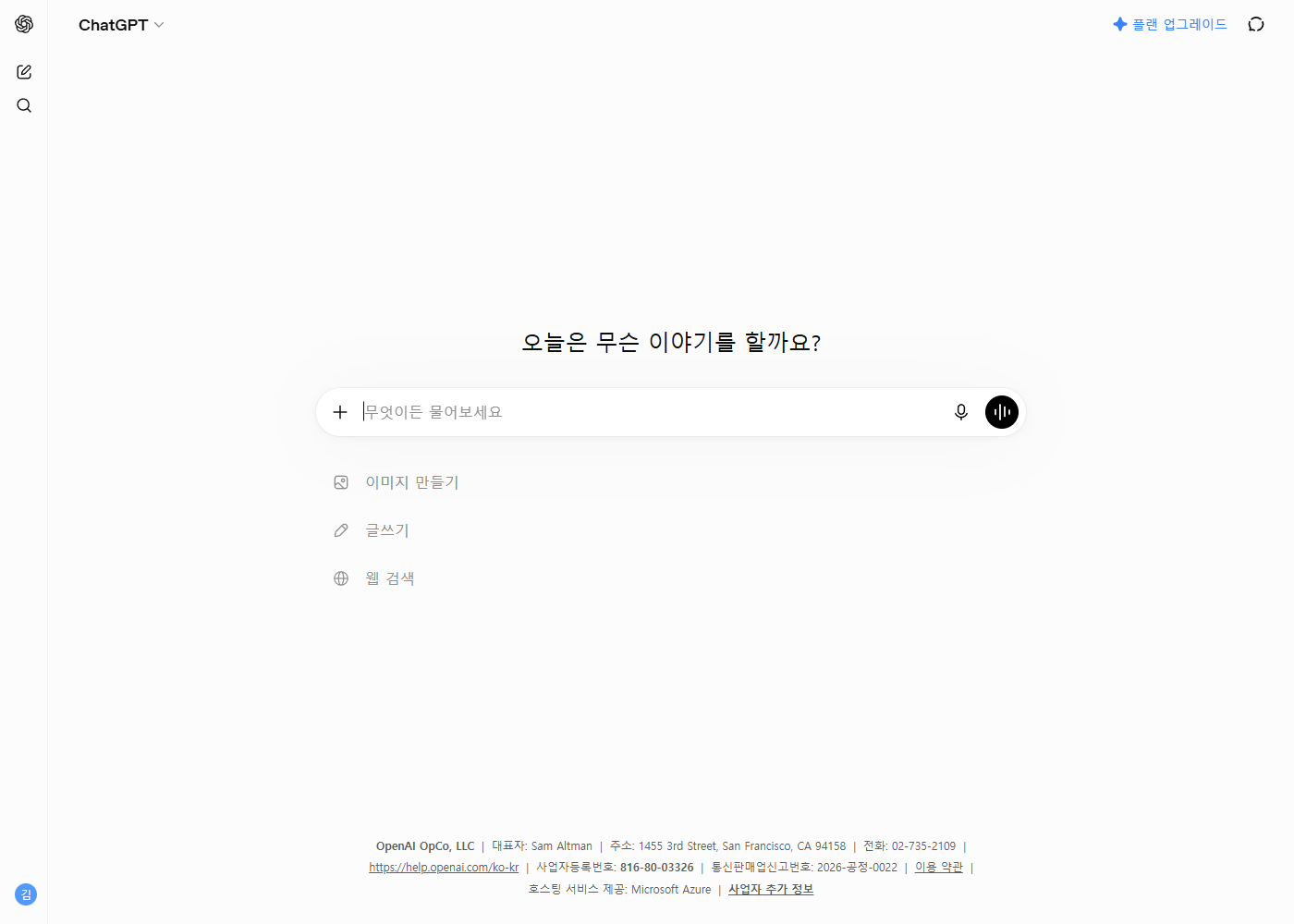
So the announcement says free users get the better model, and the interface never names the model. If OpenAI switched you to Luna this morning, or switched you back this afternoon, nothing on your screen would change.
I asked it directly instead.
Me: Which exact model version am I talking to right now? Answer with the model name only.
ChatGPT: GPT-5.6 Luna
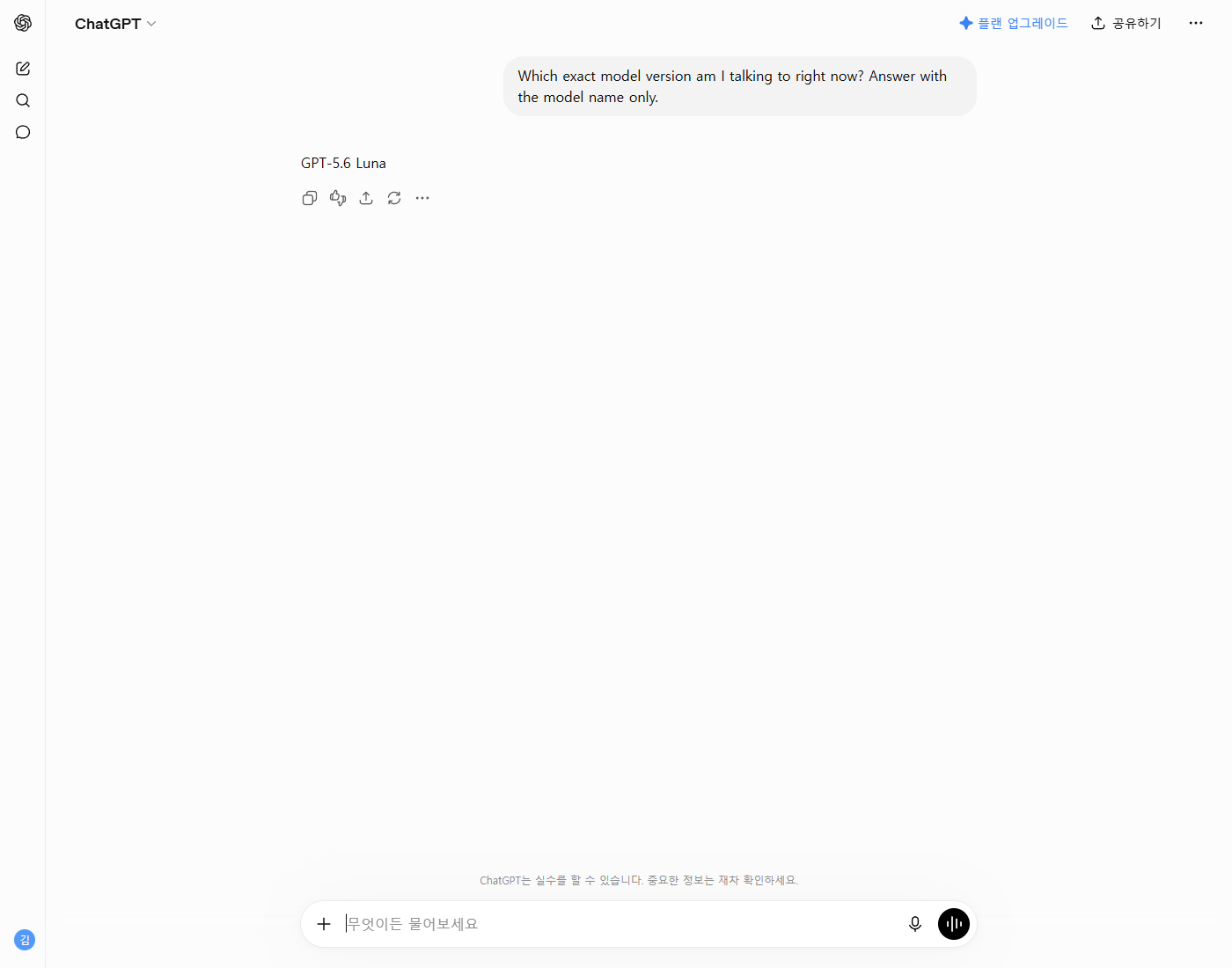
A model naming itself is a self-report, not evidence. Language models have confidently given the wrong name for themselves plenty of times. They repeat what is in their prompt or their training instead of reading a version register. What this is worth: the self-report matches the announcement, on an account that is unambiguously free, on the date the rollout was said to be happening. Consistent, not confirmed.
Then I gave it work that requires leaving its own memory:
Me: Search the web and tell me one news headline published today, with the source name and URL.
It searched and returned a headline from The Manila Times, dated August 9, 2026, with a link I could open. Live retrieval, not a summary from training data. Search is the kind of feature that historically sat behind the paywall, and on this account today it did not.
Directly beneath that answer, a panel slid in:
Improve document and research accuracy — Upgrade to Plus and synthesize documents, research, files, and complex information with an improved reasoning level.
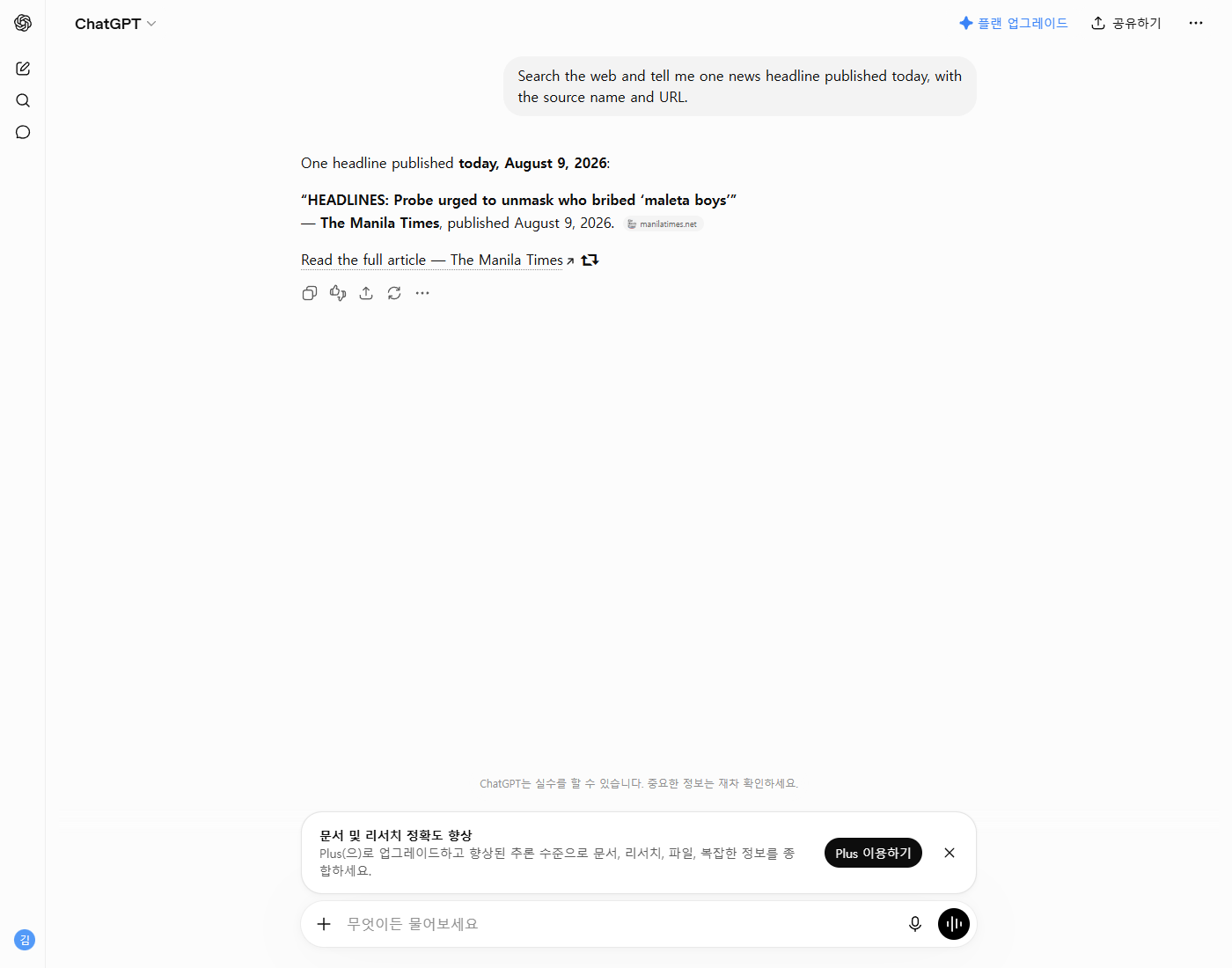
I did not go looking for the pricing page. I asked one research question, got a correct answer, and the product used that exact moment to tell me it would have been better on Plus.
OpenAI's own post puts Luna at 68% fewer responses with factual errors than GPT-5.5 Instant. That is an internal evaluation, not a third-party benchmark, and I did not reproduce it.
xAI: the headline feature is the one I could not reach
Grok Imagine was the one I most wanted to test, because Image 2.0's headline features are checkable. Transparent-background extraction either works on a coffee mug or it does not.
grok.com/imagine opens without an account. The composer is right there, with image and video modes, a speed/quality toggle, an aspect ratio control, and a wall of feature tiles: Photo Edit, BG Removal & Change, Smart Resize, Reimagine. It looks like a product you are already using.
I typed a prompt (a white ceramic mug on a transparent background, studio lighting) and pressed enter.
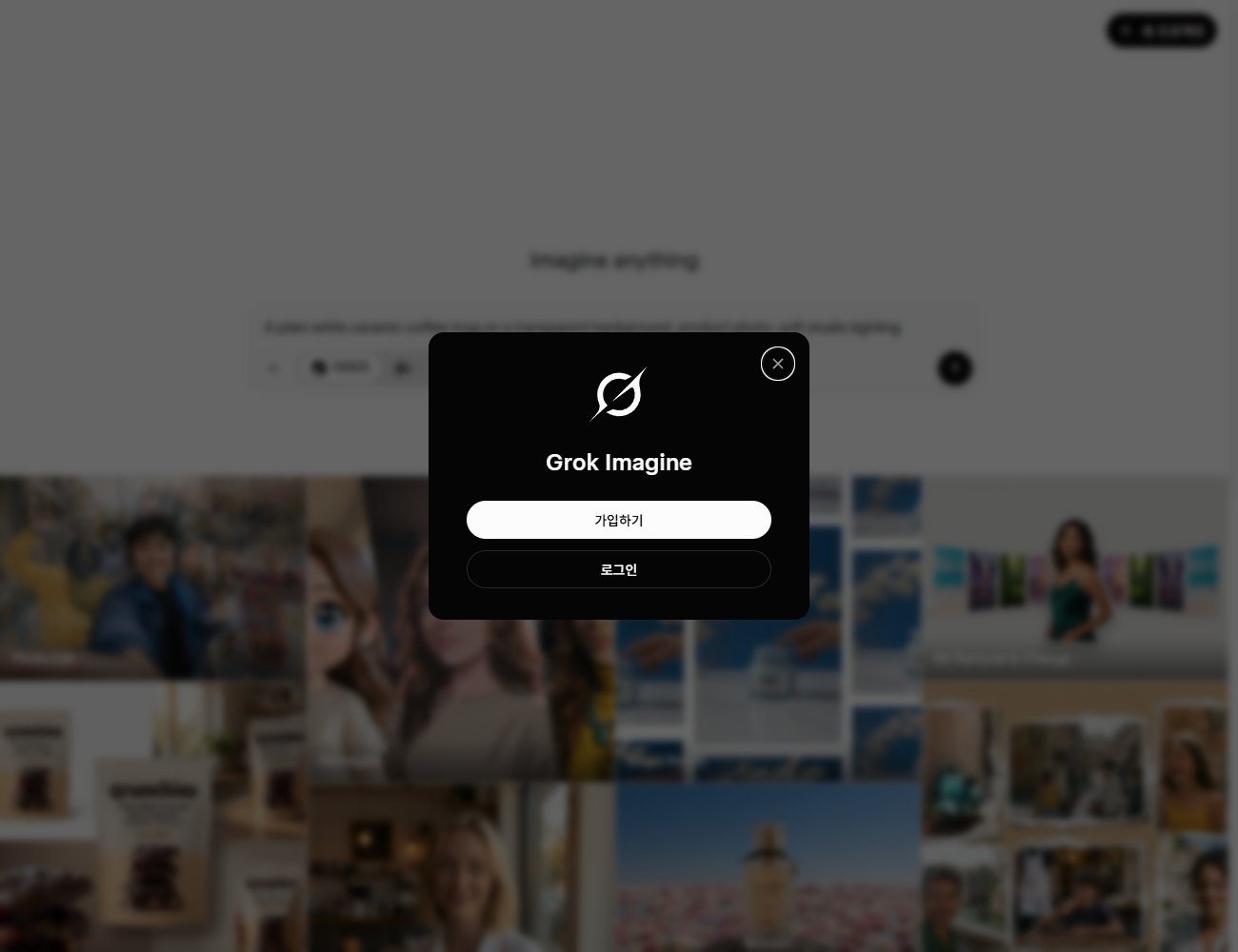
A modal appeared: Grok Imagine. Sign up, or log in. So the free tier starts with an account. I signed in and ran the same prompt again.
Signed in, it generates
Two images, 768 × 1152, in under a minute.
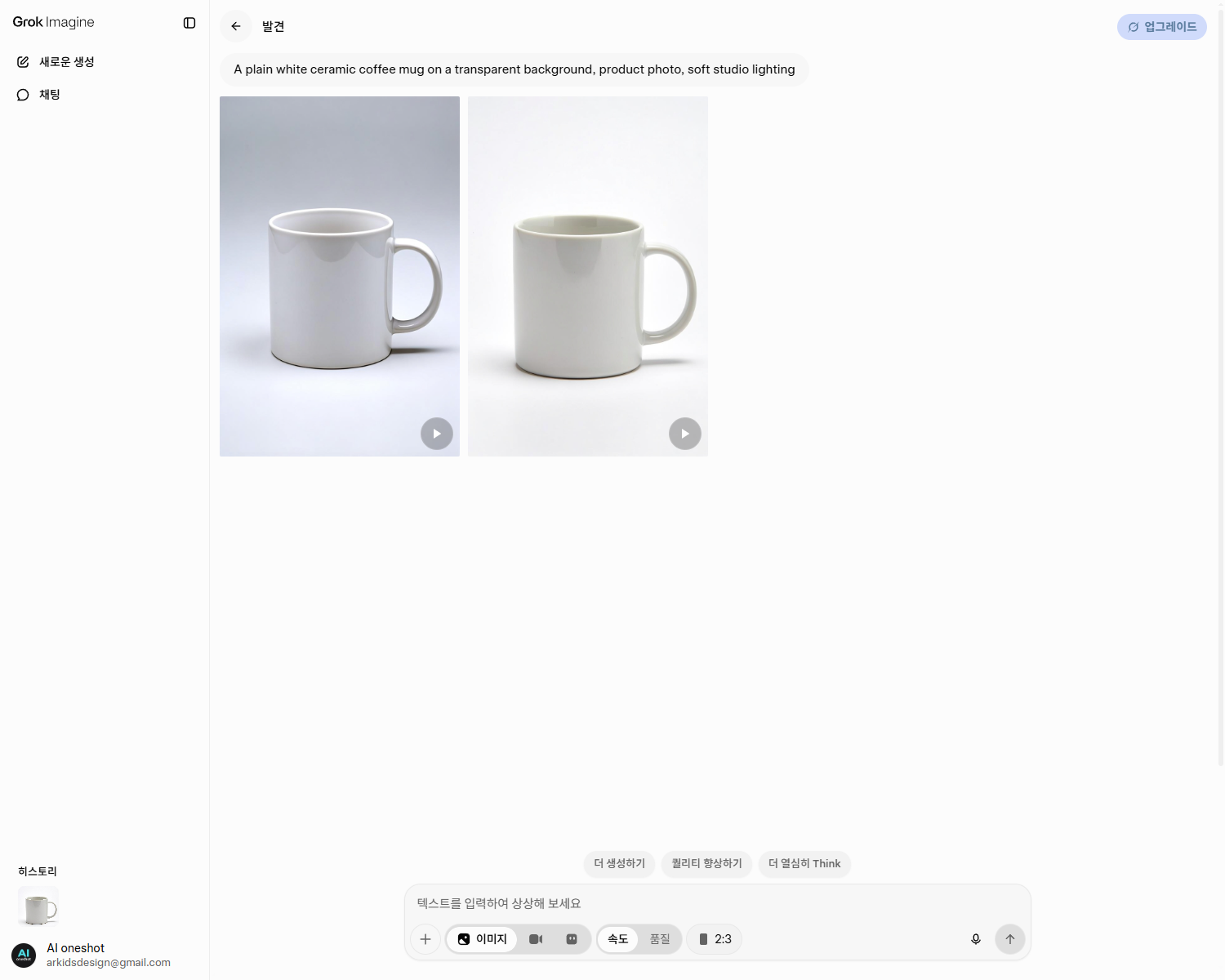
Both mugs sit on solid backgrounds. Not transparent, despite the prompt asking for exactly that.
I checked the files rather than trusting my eyes. The output URL ends in .jpg, the inline previews are data:image/jpeg;base64, and the download I pulled came back as image/jpeg, 69,304 bytes. JPEG has no alpha channel. A transparent background was never possible through that route, no matter what the prompt said.
One thing I did not expect: the file's EXIF carries a provenance string, Signature: UXN9TGOilY9XjTaqXq65n9gkW6UPP3.... The images are being signed on the way out. That was not in the announcement I read.
The actual transparency tool
Prompting was the wrong route, and that is a fair correction to make: transparency lives in a separate tool. The BG Removal & Change tile describes itself in xAI's own words:
Isolate the main subject of any photo with high-fidelity cutout quality, then deliver it on the background you choose: genuine transparent alpha, a clean white studio backdrop, or a custom scene you describe.
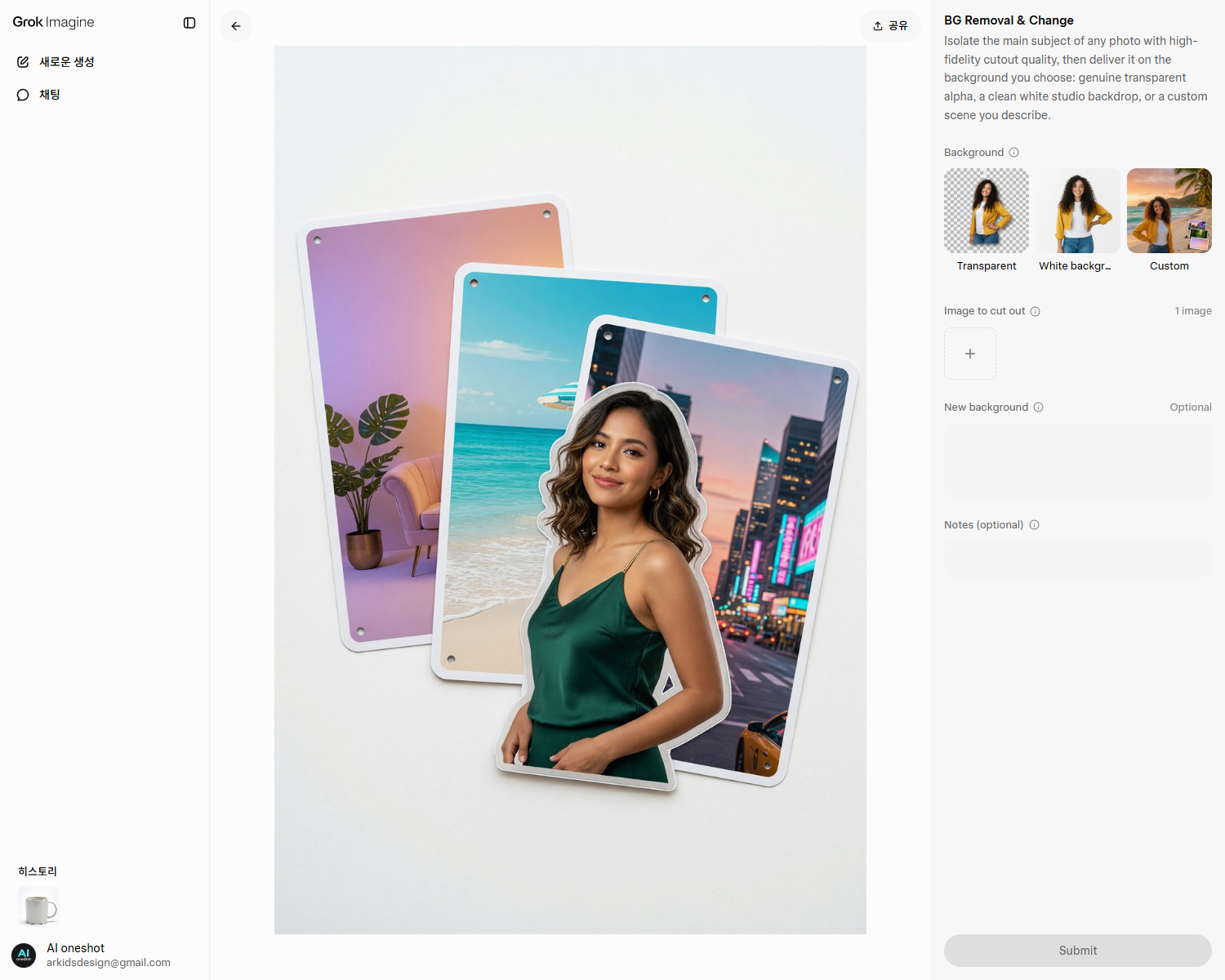
So I ran it properly. I downloaded the mug it had just generated, selected Transparent, uploaded the file, and pressed Submit with the button live.
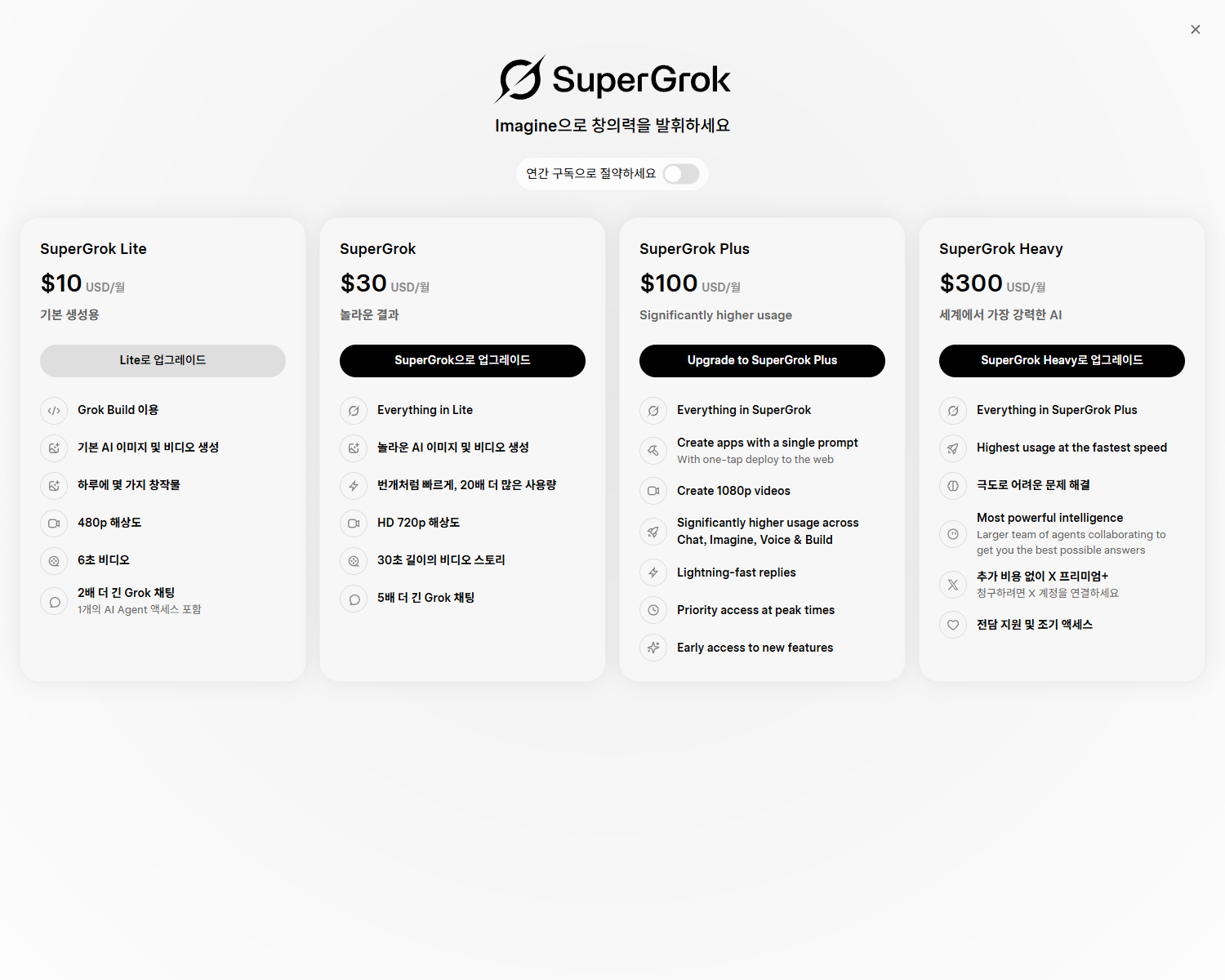
The SuperGrok pricing table came up: $10, $30, $100, $300 a month. I dismissed it and checked the page. No output image. Only the file I had uploaded.
To be precise about what I saw: the pricing modal appeared immediately after Submit and the job did not complete. I did not find a line anywhere saying "this feature is paid." That is the observation, and I am not going to state the rule behind it as if xAI had published one.
What I can say is the sequence. Generating images: free, after signup. The transparent-alpha cutout that the launch was about: not on this account, not today.
Alibaba: answered me with no account at all
Qwen was the opposite experience in every respect.
I opened chat.qwen.ai logged out. The header names the model, Qwen3.8-Max, in the top-left next to a dropdown, while the login and signup buttons sit unused in the corner.
I typed a question and sent it, still logged out:
Me: In one sentence: which model are you and what is your context window?
Qwen: I am Qwen3.8, an advanced large language model developed by Alibaba Group's Tongyi Lab, featuring an expansive context window capable of processing hundreds of thousands of tokens.
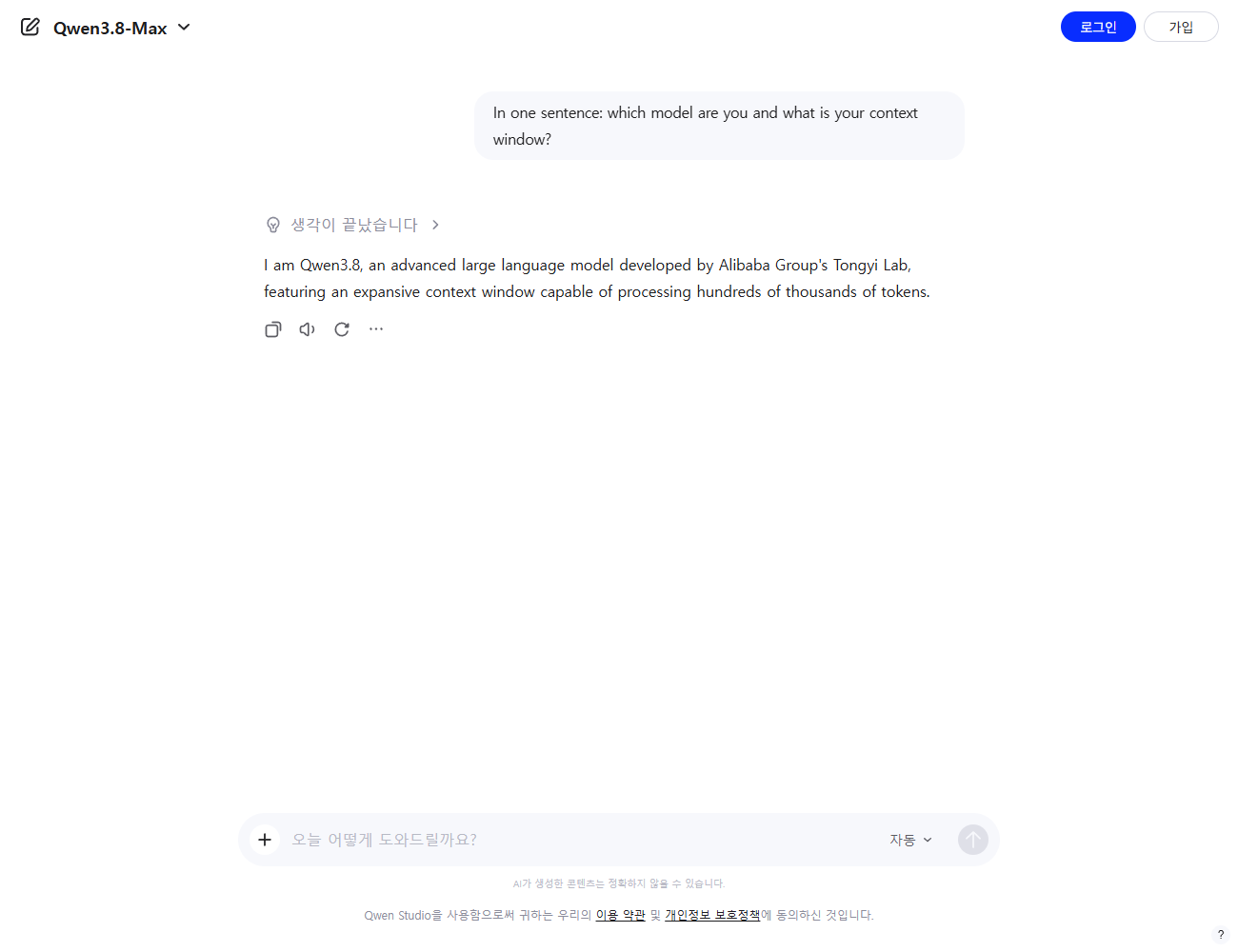
No account, no credit card, no wall. It thought, then answered.
Two caveats. This is a self-report again, so treat the identity claim the same way I treated ChatGPT's. And the answer says "hundreds of thousands of tokens" while Alibaba's own launch post claims a one-million-token context. The model is vaguer about itself than the marketing is, which is a small thing but the kind of small thing worth noticing before you quote a model about its own specs.
What each one actually gave me
| Account needed | Model named in UI | What I got for free | |
|---|---|---|---|
| ChatGPT (Free) | Yes, signed in | No | Working model, live web search, an upgrade banner |
| Grok Imagine | Yes, blocked at send | n/a | Image generation yes. The transparent-alpha tool, no |
| Qwen3.8-Max | No | Yes, in the header | A full answer, logged out |
The spread here is the story. Three launches, all described in the same "now available" language, and the actual cost of entry ranges from nothing at all to the specific thing they announced is behind a subscription.
There is a second pattern underneath it. The two systems that want you in an account are the two that do not tell you what model you are talking to. ChatGPT free shows no model name anywhere, and Grok shows you a composer before it shows you the wall. Qwen, which asked me for nothing, printed its model name in the header before I typed a word.
What I could not check
- "Unlimited" is untested. I sent a handful of messages on ChatGPT free. That proves nothing about a rate limit.
- Grok's cutout quality is untested. I generated images, but the background-removal job never ran, so I have nothing to say about whether the cutout is any good. Anyone reading my post as a verdict on Image 2.0's editing quality is misreading it.
- One account, one locale, one day. These are staged rollouts and my accounts are Korean-locale, tested on August 9. Yours may differ, and that is what staged means.
- Both model self-reports are weak evidence. Neither ChatGPT nor Qwen was reading a version register.
- Vendor numbers are vendor numbers. OpenAI's 68% and Alibaba's one-million-token context are both company claims I did not reproduce.
The part worth keeping
If you use ChatGPT free, you probably did get Luna this week, and there is no way to confirm it from the interface. Knowing which model you are talking to has quietly become part of what you pay for.
If you read that Grok Imagine is free to try: image generation is, after you hand over an account. The transparent-background cutout that the launch was actually about stopped at a pricing table for me.
And if you want to test a current flagship model in the next sixty seconds without giving anyone your email, Qwen is the one that will let you.
Last verified August 9, 2026. Every screenshot is from my own screen. If any of these change on my accounts, I will note it here.